Start with what matters.
List the appliances you want to keep running, then work out their energy needs.
Estimate your runtimeA cold fridge. A working router. A little light. Find out how much backup power you actually need.
Source-led guides. Clear assumptions. A plan you can understand.
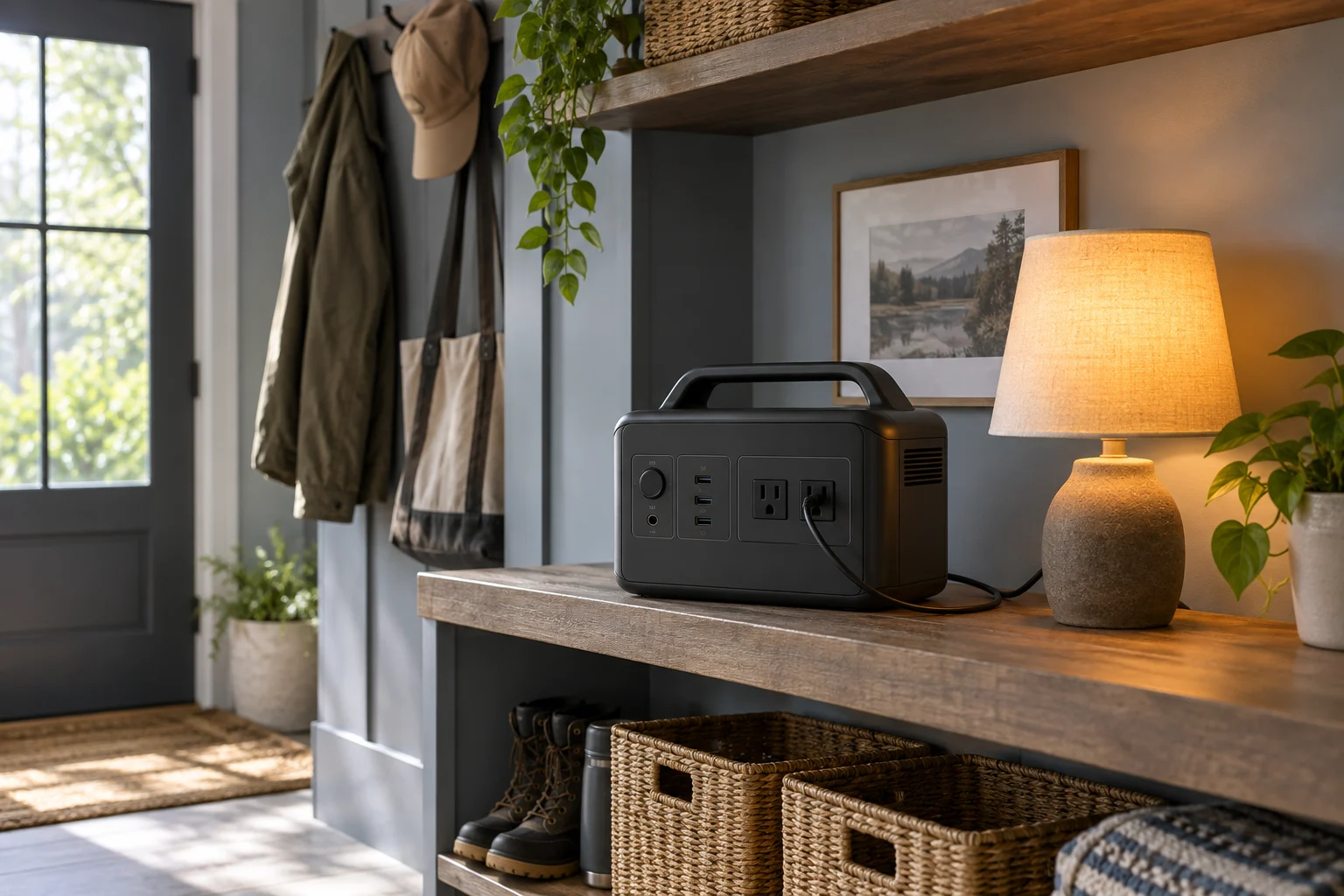
AI-generated editorial illustration. Not a product test.
Choose the right size, understand the limits, and put your budget where it matters.
List the appliances you want to keep running, then work out their energy needs.
Estimate your runtimeCapacity, continuous output and charging inputs answer different questions.
See the comparisonA portable battery can cover selected essentials. It isn't automatically whole-home backup.
Explore the guidesA worked 24-hour essentials budget and the safety rules that do not change.
Read the guide ↗A 1,500W heater empties a 1kWh battery in about half an hour. What to do instead.
Read the guide ↗Why the humidifier and the inverter decide most of your battery size.
Read the guide ↗One describes power. The other describes stored energy. You need both to choose a battery.
Read the guide ↗Measure energy over time, then check whether the compressor can start.
Read the guide ↗A useful buying checklist, starting with your appliances rather than a discount.
Read the guide ↗Choose your appliances and estimate runtime with losses and reserve included.
Read the guide ↗Compare a daily solar assumption with a battery-side energy budget.
Read the guide ↗Calculate the electricity cost using your own US-dollar rate.
Read the guide ↗Compare energy, portability and your actual load before moving up a size.
Read the guide ↗Add up energy by task, including the quiet loads that stay on.
Read the guide ↗Internal power consumption matters most when your appliance load is small.
Read the guide ↗